Collision Insurance Explained: What It Covers and Why It Matters

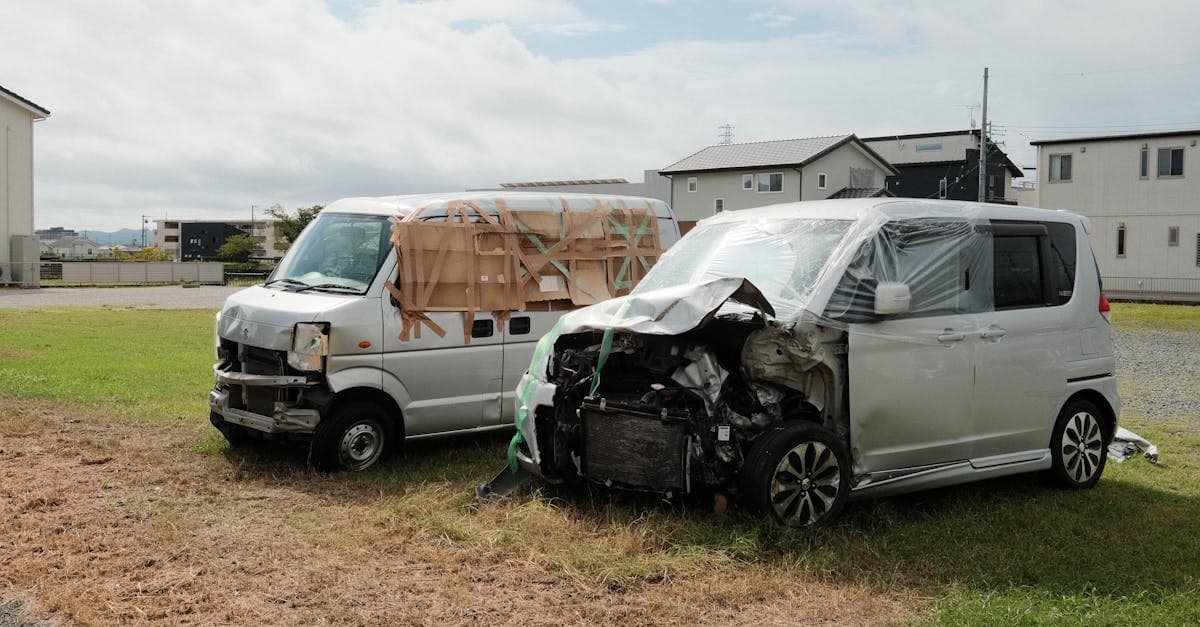
You are driving through an intersection when another driver runs a red light and slams into your passenger side. The damage is extensive — crumpled door panels, broken glass, deployed airbags. The repair estimate comes in at $12,000. Without collision insurance, that entire amount comes out of your pocket while you wait months for the other driver's insurance to settle.
Let's break this down further. With collision coverage, the process is different. You file a claim with your own insurer, pay your $500 deductible, and receive $11,500 toward repairs. Your insurer then pursues the at-fault driver's insurance through subrogation to recover their costs — and often your deductible as well.
This scenario illustrates why collision insurance exists: it is the regrowth that follows the storm of vehicle damage. It gets your vehicle repaired quickly using your own coverage rather than waiting for a potentially lengthy liability claim against the other driver. If you caused the accident yourself, collision coverage is even more critical — the other driver's insurance will not pay for your vehicle damage at all.
Collision insurance covers damage from a wide range of impact events: hitting another vehicle, striking a stationary object like a pole or guardrail, rolling your vehicle, or driving into a ditch. It applies whether the accident happens on a highway, a residential street, or a parking lot. The consistent thread is physical contact between your vehicle and another object or surface.
Understanding what collision insurance covers — and equally important, what it does not — helps you make informed decisions about this significant component of your auto insurance premium.
Understanding Your Collision Deductible
Let's break this down further. Your collision deductible is the amount you pay out of pocket before insurance covers the remaining repair or replacement cost. It is the price of accessing the regrowth that follows the storm of vehicle damage through your insurance policy.
Common deductible amounts range from $100 to $2,500, with $500 and $1,000 being the most popular choices. The right amount depends on your savings, your premium sensitivity, and how much out-of-pocket cost you can absorb comfortably after an accident.
How the deductible applies in practice: If your collision repair costs $6,000 and your deductible is $500, you pay $500 and the insurer pays $5,500. If repairs cost $400 and your deductible is $500, the insurer pays nothing — the entire cost falls below your deductible threshold.
Deductible and premium relationship: Higher deductibles produce lower premiums. Moving from a $250 deductible to a $500 deductible typically saves 15 to 20 percent on your collision premium. Moving from $500 to $1,000 saves an additional 10 to 15 percent. Each increase saves less incrementally because the insurer's risk reduction shrinks.
The break-even calculation matters. If raising your deductible from $500 to $1,000 saves you $150 per year, you break even after 3.3 years without a claim. Since the average driver goes seven to ten years between collision claims, the higher deductible saves money for most people over time.
Your deductible should match your emergency fund. If paying a $1,000 deductible would create financial hardship, stick with $500. The premium savings from a deductible you cannot actually afford are meaningless if an accident leaves you unable to cover the cost.
Understanding Actual Cash Value in Collision Claims
Think of it this way. Collision insurance pays up to your vehicle's actual cash value — not its original purchase price or replacement cost. Understanding how ACV works prevents disappointment when you file a claim.
What actual cash value means: ACV is your vehicle's fair market value immediately before the accident. It reflects the price a reasonable buyer would pay for your specific vehicle in its pre-accident condition, considering year, make, model, trim, mileage, condition, options, and local market factors.
How insurers calculate ACV: Most insurers use third-party valuation services that aggregate vehicle listing data, auction results, and dealer transactions. CCC Intelligent Solutions, Mitchell, and Kelley Blue Book are common sources. The valuation considers your vehicle's specific attributes — a low-mileage vehicle in excellent condition receives a higher valuation than a high-mileage vehicle with wear.
Depreciation is the key factor. New vehicles lose 20 to 30 percent of their value in the first year and continue depreciating roughly 15 percent annually after that. A vehicle purchased for $35,000 may have an ACV of $22,000 after three years. This gap between what you paid and what the insurer pays is the most common source of collision claim dissatisfaction.
Challenging an ACV determination: If you believe the insurer's valuation is too low, gather evidence. Search for comparable vehicles for sale in your area with similar year, make, model, mileage, and condition. Document any recent maintenance, new tires, or improvements that increase your vehicle's value. Present this evidence in writing and request a review.
Gap insurance addresses the ACV shortfall. If you owe more on your loan than your vehicle's ACV — common in the first two to three years of a loan — gap insurance covers the difference between the collision payout and your loan balance.
Weather-Related Accidents and Collision Coverage
Here is a simple way to remember this. Bad weather causes accidents, but the collision that results from bad weather is still a collision. Understanding how weather-related accidents interact with your collision coverage prevents confusion at claim time.
The key distinction: If weather directly damages your vehicle — hail dents, flood damage, a tree falling on your parked car — that is a comprehensive claim. If weather causes you to lose control and collide with something — hydroplaning into a guardrail, sliding on ice into another car — that is a collision claim. The damage resulted from impact, even though weather was the underlying cause.
Ice and snow accidents are among the most common weather-related collision claims. Sliding through an intersection, skidding into a curb, or rear-ending a vehicle because of icy braking conditions are all collision events. Your collision coverage applies normally.
Hydroplaning accidents occur when your vehicle loses contact with wet road surface and collides with another vehicle or object. Despite the water being the root cause, the resulting impact makes it a collision claim.
Fog and low visibility collisions are covered under collision insurance. Reduced visibility does not change the coverage classification — if your vehicle hits something, collision coverage applies.
Wind-related crashes where wind pushes your vehicle into another vehicle or object are typically collision claims. However, wind damage itself — such as a windblown sign hitting your parked car — is comprehensive. The determining factor is whether your vehicle was in motion and struck something.
Seasonal claim patterns: Collision claims spike during winter months in northern states and during heavy rain seasons in southern states. Adjusting your driving habits during these periods reduces your collision claim risk.
Collision Insurance in No-Fault States
Let's break this down further. No-fault insurance laws affect how medical bills and lost wages are handled after an accident, but collision coverage operates largely the same regardless of your state's fault system. Understanding the distinction prevents confusion.
What no-fault means: In no-fault states, each driver's own insurance pays for their medical expenses and lost wages after an accident, regardless of who caused it. This system is designed to reduce lawsuits by having each party's insurance respond first.
What no-fault does not affect: Collision coverage works identically in fault and no-fault states. You file a collision claim with your own insurer, pay your deductible, and the insurer covers repairs up to your vehicle's actual cash value. The no-fault system governs injury claims, not vehicle damage claims.
Property damage in no-fault states: Despite the name, property damage liability still follows traditional fault-based rules in most no-fault states. If another driver damages your vehicle, their property damage liability insurance pays — or you can use your own collision coverage and let your insurer subrogate.
The twelve no-fault states are Florida, Hawaii, Kansas, Kentucky, Massachusetts, Michigan, Minnesota, New Jersey, New York, North Dakota, Pennsylvania, and Utah. If you live in one of these states, understand that no-fault applies to personal injury protection, not to collision coverage.
Choice states: Kentucky, New Jersey, and Pennsylvania offer drivers a choice between no-fault and traditional tort coverage for injury claims. This choice does not affect collision coverage — it remains the same regardless of which injury system you select.
Practical impact on collision claims: The main practical difference in no-fault states is that fault determination may receive less emphasis, which can slow subrogation efforts. Your insurer may take longer to recover your deductible through subrogation if fault is not clearly established.
What Collision Insurance Actually Covers
Let's break this down further. Collision insurance is the deep roots that keep your finances grounded after the collision shakes everything. It specifically covers damage to your own vehicle resulting from impact with another vehicle or object. The scope is clearly defined and includes several common accident scenarios.
Vehicle-to-vehicle collisions are the most obvious covered event. Whether you rear-end another car, are hit at an intersection, or are sideswiped on the highway, collision coverage pays for your vehicle's repairs regardless of who is at fault. This applies to accidents with cars, trucks, motorcycles, and any other motor vehicle.
Single-vehicle accidents are equally covered. Hitting a guardrail, telephone pole, tree, curb, or any stationary object triggers collision coverage. Driving into a ditch, rolling your vehicle, or running off the road also qualifies. The key element is impact — your vehicle struck something.
Pothole and road debris damage that results from a collision event is covered. If you hit a pothole that damages your suspension or rim, collision coverage applies because your vehicle impacted an object. Similarly, striking debris on the roadway is a collision event.
Parking lot incidents including backing into posts, being hit by another vehicle while parked, and door-opening damage caused by your vehicle's motion fall under collision coverage. Parking lot claims are among the most frequently filed collision claims in the United States.
The common thread across all covered events is physical impact between your vehicle and another object or surface. If the damage results from something other than impact — such as theft, vandalism, fire, or weather — it falls under comprehensive coverage instead.
What Determines Your Collision Insurance Premium
Think of it this way. Your collision premium reflects the insurer's assessment of how likely you are to file a claim and how much that claim will cost. Understanding these factors is essential for managing what you pay for the thick bark that protects your financial tree from collision impact.
Vehicle make and model: The single biggest factor in collision premium pricing. Vehicles that are expensive to repair, frequently stolen for parts, or involved in more accidents cost more to insure. A luxury sedan costs significantly more to cover than an economy car because parts and labor are more expensive.
Vehicle age and value: Newer, more valuable vehicles cost more to insure because the potential payout is higher. As your vehicle depreciates, your collision premium should decrease — though not always proportionally. Review your premium against your vehicle's current value annually.
Your driving record: Accident history is a strong predictor of future claims. Drivers with recent at-fault accidents pay substantially more for collision coverage — often 20 to 40 percent more. A clean record for three to five years typically restores preferred pricing.
Your deductible choice: As discussed, higher deductibles reduce premiums. This is the factor you have the most direct control over and the easiest lever for managing your collision cost.
Location: Urban areas with more traffic density, higher accident rates, and more expensive repair labor produce higher collision premiums than rural areas. Your ZIP code is a significant rating factor.
Credit-based insurance score: In most states, insurers use credit information as a rating factor. Drivers with higher credit scores statistically file fewer claims and receive lower collision premiums. Maintaining good credit indirectly reduces your insurance costs.
Collision Coverage and Hit-and-Run Accidents
Here is a simple way to remember this. Hit-and-run accidents leave you without an identifiable at-fault driver to pursue for damages. In these frustrating situations, your collision coverage becomes the thick bark that protects your financial tree from collision impact that ensures your vehicle gets repaired.
How collision applies: When a driver hits your vehicle and flees, you file a collision claim with your own insurer. You pay your deductible, and the insurer covers the repair costs up to your vehicle's actual cash value. Without collision coverage, you would bear the entire repair cost yourself.
Collision vs uninsured motorist property damage: Some states offer uninsured motorist property damage (UMPD) coverage that may also apply to hit-and-run scenarios. In states where UMPD covers hit-and-runs, you might file under UMPD instead of collision — potentially with a lower deductible or no deductible at all. Check your state's rules and your policy terms.
Reporting requirements: File a police report immediately after discovering hit-and-run damage. Most insurers require a police report for hit-and-run claims, and the report creates an official record that supports your claim. Note the time, location, and any witness information.
Rate impact considerations: Hit-and-run claims filed under collision are typically treated as not-at-fault claims and should not increase your premium. However, claim frequency — regardless of fault — can sometimes affect your rates or your insurer's willingness to renew. Consider whether the damage exceeds your deductible by enough to justify filing.
Prevention and documentation: Dash cameras that record while parked can capture hit-and-run incidents. Parking in well-lit areas with security cameras increases the chance of identifying the responsible driver, which helps your insurer pursue subrogation.
The Strategic Approach to Collision Insurance
Collision coverage is not a set-it-and-forget-it decision. It is a financial strategy that should evolve with your vehicle, your finances, and your life circumstances. The smartest drivers treat collision insurance as the deep roots that keep your finances grounded after the collision shakes everything — a dynamic tool that requires periodic adjustment.
The strategic framework is simple. For new and financed vehicles, carry collision with a deductible you can afford from savings — typically $500 to $1,000. As your vehicle ages and depreciates, gradually increase your deductible to reduce premiums. When the annual premium exceeds 10 percent of vehicle value and you can afford to self-insure, consider dropping collision entirely.
Throughout this lifecycle, monitor your premium against your vehicle's actual cash value. Shop rates every two to three years. Take advantage of safety feature discounts, good driver discounts, and bundling savings. And always maintain an emergency fund that can cover your deductible — because the best collision coverage in the world does no good if you cannot afford to file a claim.
Collision insurance exists to transfer the risk of vehicle damage from you to an insurer. Managing that transfer intelligently — knowing when to carry it, how much to pay for it, and when to let it go — is a cornerstone of smart auto insurance management.
Continue reading

Beyond the Premium: What Really Matters When Comparing Insurance Quotes
The cheapest quote is not always the best deal. Understanding what drives real value in an insurance policy helps you compare quotes on the factors that matter most when you actually need to file a claim.

The Annual Policy Checkup: Why Once a Year Is the Minimum
At minimum, review every insurance policy once a year. Annual checkups catch coverage gaps, identify savings opportunities, and ensure your protection matches your current life circumstances.

Assignment of Benefits Explained: How AOB Transfers Your Claim Rights
An AOB agreement signs over your right to collect insurance benefits to a contractor or vendor. Understanding this transfer is critical before you sign any document after property damage.